
I love to experience a destination on foot. There is nothing quite like wandering down (or UP) a cobblestone lane, stopping for a coffee in a tucked-away café, admiring city architecture, or standing still long enough to take in a sweeping mountain, coastline, or vineyard view.
But after 50, and especially with arthritis in my knees, I have learned that loving to walk and being able to walk all day are not always the same thing.
The good news? You do not always have to give up active, meaningful travel to take better care of your joints.
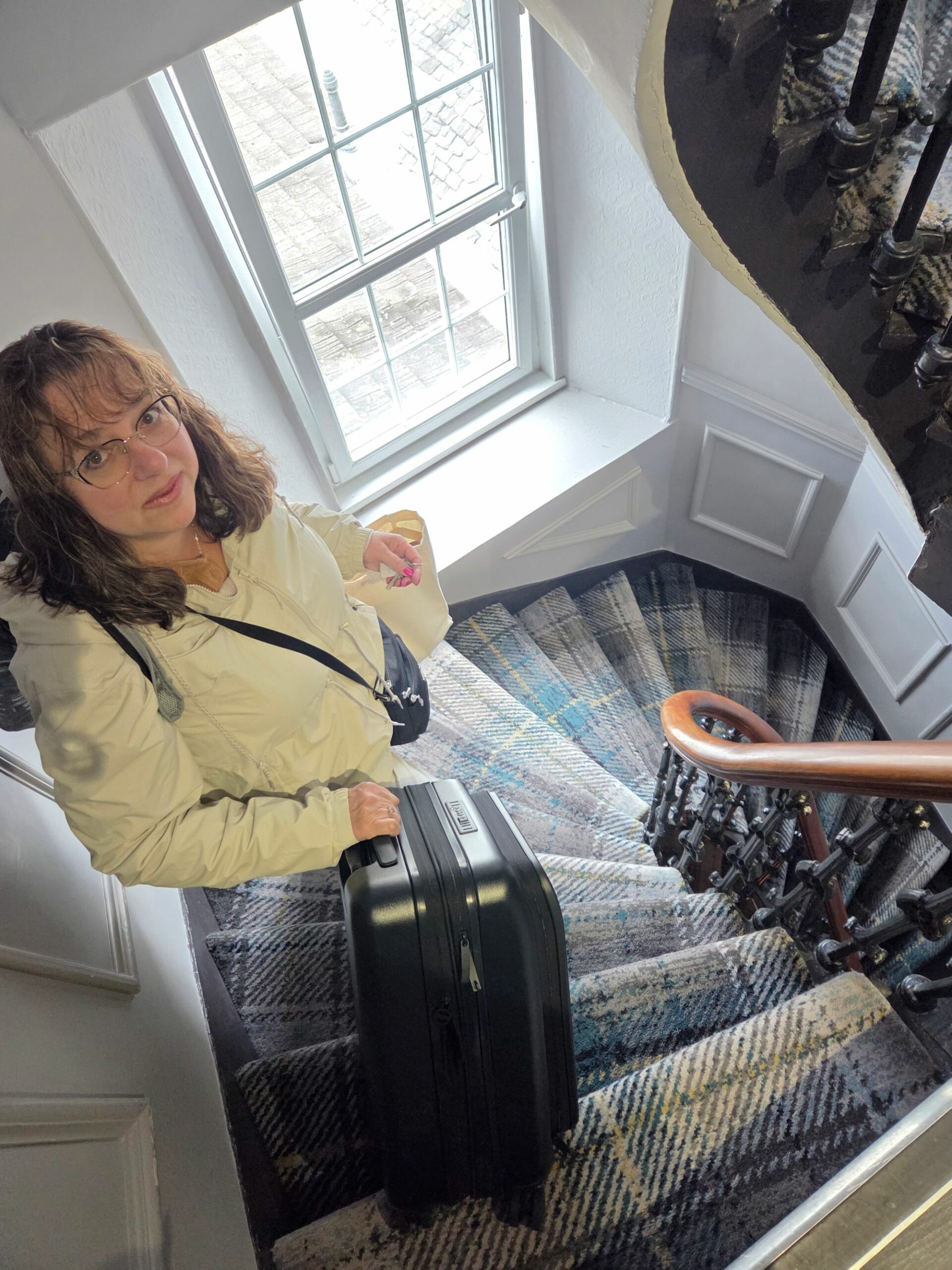
I’m Not Giving Up Exploring
For me, travel has always been about the moments you miss from a bus window:
- Discovering a quiet neighborhood in Rome or Paris
- Walking a waterfront promenade at sunset
- Browsing a local market
- Taking a trail to a memorable viewpoint
- Pausing in a charming square simply because it feels right
This kind of travel is still possible with knee arthritis. It just requires a little more intention, a few smarter choices, and permission to travel at a pace that feels good for your body.
Practical Knee-Friendly Travel Tips
A few additional ideas that have helped me are refreshingly practical:
Choose footwear carefully for your particular situation.
Keep regular movement part of your daily life.
Plan sightseeing by neighborhood so you are not crisscrossing a city unnecessarily.
Stretch before you head out for the day, stop and stretch throughout the day, and stretch again at the end of the day.
Give yourself permission to slow down when needed. Travel is not a race.
For me, knee-friendly travel is not about doing less. It is about being more intentional with how I spend my energy so I can continue enjoying the experiences that matter most.


What Helps Me Stay Active While Traveling
When all-day walking and hiking began catching up with my knees, I spoke with my doctors. Their recommendations helped me think about joint care as part of my everyday routine, not something to address only after I was already hurting.
I just wish I had been told to start some of this in my 30s!
Everyone’s situation is different, of course, so always discuss persistent pain, exercise plans, diet changes, or supplements with your own physicians, particularly if you take medications, have allergies, or have other medical conditions.
Collagen Peptides
One suggestion was incorporating a daily collagen peptide powder into my routine. Specifically, I looked for a product containing Type II collagen, which is the type of collagen associated with joint cartilage.
I found a collagen powder I like because it is available both in a large container for home and in individual travel packets that are easy to tuck into a carry-on, purse, or day bag. The product I chose is non-GMO, grass-fed, gluten-free, and keto-friendly, all features that may be useful depending on your dietary preferences and needs.
As an Amazon Associate we earn from qualifying purchases. This is at no extra cost to you!
Products I use (paid links):
Collagen Peptides at Home Container
Collagen Peptides Travel Packets
Creatine Monohydrate
The second supplement suggested to me was Creatine Monohydrate to support recovery and strength.
Creatine Monohydrate Powder (paid link)
Additionally, I take an Omega 3
I mix both of these into my morning coffee. My friends tell me they mix theirs with oatmeal, tea, or protein shakes. It is one small way I support my daily routine and, hopefully, continue enjoying the active travel style I love.
It is important to keep expectations realistic: collagen is a supplement, not a replacement for medical care, strength and mobility work, appropriate activity modification, and a balanced diet. Some studies of Type II collagen for knee osteoarthritis have shown improvements in pain, stiffness, and function, with more studies ongoing. Supplements are also not reviewed by the FDA in the same way as prescription drugs, so it is wise to choose products carefully, do your research, and check with your doctor and pharmacist about possible medication interactions.
Another Wellness Addition: Red Light Therapy
Last year, I injured my back. A friend loaned me her red light therapy pad for the weekend, and I found it so helpful that I immediately ordered one.
I then started using it on my knees and hands as part of my routine for arthritis discomfort. I find red light therapy to be another drug-free option that is easy to fit into my routine and, depending on the device, easy to bring along when I travel.
I view it as another supportive tool, but as always, check with your doctor and pharmacist first. Red light therapy may interact with photosensitizing medications. (paid links)
Keep Exploring, One Step at a Time
Getting older or dealing with arthritis does not have to mean giving up the way you love to travel.
For me, it has meant learning to prepare a little differently, listen to my body a little more closely, and make choices that allow me to keep wandering those cobblestone streets, hiking toward beautiful views, and exploring the world on my own two feet.
Travel the world comfortably, one memorable step at a time.